Cyanobacterial Harmful Algal Blooms: An Underappreciated Toxic Phenomenon
What are Algal Blooms?
Cyanobacteria (aka blue-green algae) are gram-negative photosynthesizing primitive bacteria that are naturally present in salt, brackish, and freshwater
Exceptionally hardy, many species are tolerant of a broad range of temperatures and pH. They are resistant to desiccation and are able to alter their buoyancy to maximize access to light and O2.
“Bloom”: significant aggregation of cyanobacteria biomass in a body of water
Conditions encouraging cyanobacteria overgrowth:
Eutrophication: buildup of phosphorus and nitrogen in a body of water due to runoff from industrial and agricultural sources
Heavy rainfall, which increases eutrophication through increased runoff
Heat, although cold-water blooms can also occur. Many species of cyanobacteria begin to outcompete other phytoplankton around water temperature ~77° F.
Different genera of cyanobacteria may thrive in different areas of the same body of water, and at different times of year
In Lake Erie, microcystis genus thrives in Summer (ideal water temperature ≥65° F), and planktothrix thrives in Spring/Fall
Shallow areas of western Lake Erie are most prone to algal blooms, usually worst in July-October
Current Cyanobacterial Presence in Lake Erie
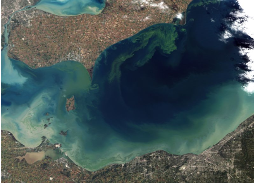
Lake Erie cyanobacterial harmful algal bloom as seen from Space. NASA, 2011
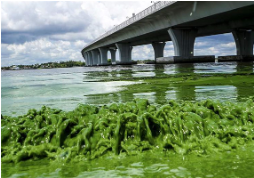
Lake Erie cyanobacterial harmful algal bloom in 2018. Pittsburgh Post-Gazette, 2018
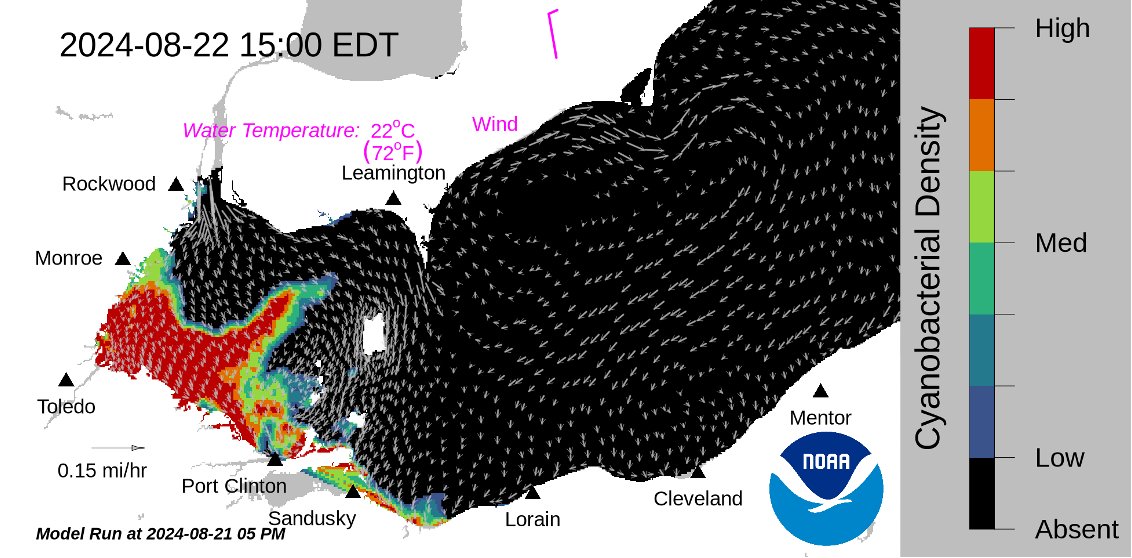
Lake Erie Bloom Position Forecast. United States National Centers for Coastal Ocean Science. National Oceanic and Atmospheric Association. Accessed 08/20/2024 at https://coastalscience.noaa.gov/science-areas/habs/hab-forecasts/lake-erie/bloom-position-forecast/.
Human Exposure to Cyanobacteria
Cyanobacteria produce a range of toxic metabolites, and humans can be exposed in several different ways:
Dermatological / ocular contact (swimming, boating, wading, etc)
Ingestion (drinking water; consuming fish/shellfish)
Respiration of bacteria aerosolized through evaporation and water spray
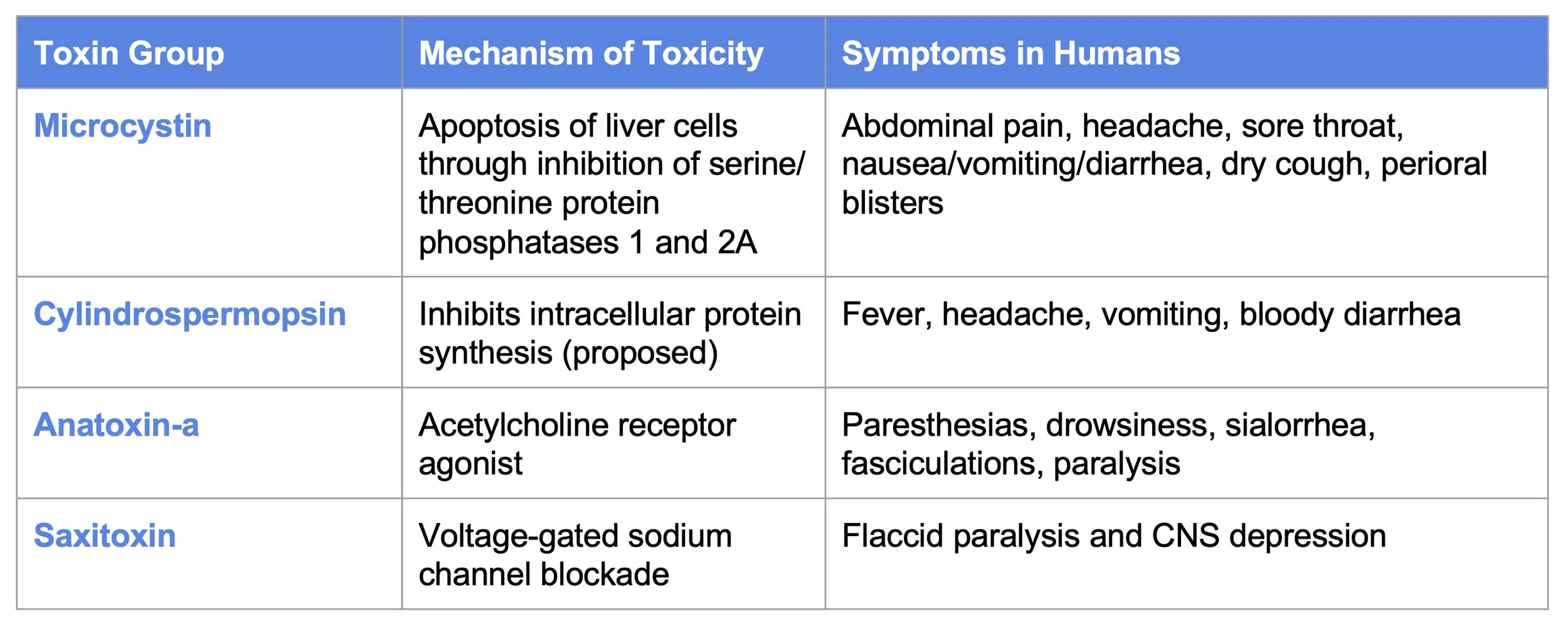
Acute exposure to high levels of cyanotoxins can result in any of several toxidromes (depending on the species of cyanobacteria present).
Chronic exposure to cyanotoxins has been linked to increased risk of developing non-alcoholic fatty liver disease, hepatocellular carcinoma, and amyotrophic lateral sclerosis. Cyanotoxins are under investigation for possible carcinogenic effects.
Toxins Produced by Cyanobacteria & Associated Symptoms
Toxin highlight: Microcystin-LR
Microcystins (cyclic heptapeptides) are the family most commonly implicated in reports of human cyanotoxicity
MC-LR is a particularly toxic compound within the family
Highly stable in wide range of temperatures and pH
Resistant to enzymatic hydrolysis in animal guts by proteases (e.g., pepsin; trypsin)
Once aerosolized, can be transported kilometers away from source water due to its stability
When ingested, 7-10% absorbed through GI tract
Does not readily cross cell membranes. MC-LR is taken up by hepatocytes through active transport (via organic anion transporter peptides). Metabolized by glutathione conjugation.
Therefore rapidly localizes to liver, after which 75% of original dose excreted within 12 hours (urinary and fecal excretion)
Toxicity is primarily hepatic with some renal and intestinal damage
D-glu group and ADDA side chain are believed to help MC-LR inhibit protein phosphatases (PP1 and PP2A) in mammalian cells
Inhibition of these protein phosphatases results in initiation of apoptotic sequences and oxidative stress, leading to cell death (P53 and MAPK pathways). This is particularly pronounced in the liver, and can result in hepatic necrosis.
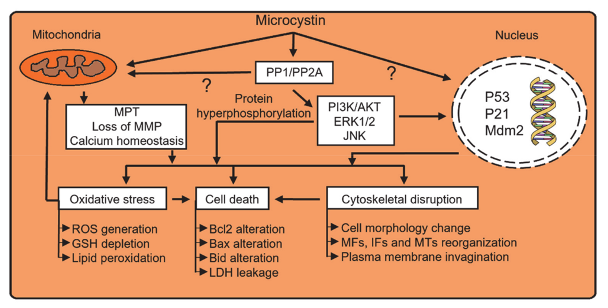
Cell death pathways resulting from protein phosphatase binding by MC-LR (from Arman et al, 2021)
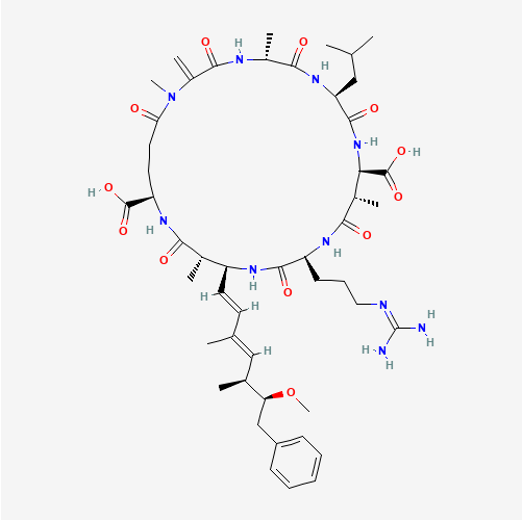
Microcystin-LR structure. PubChem, accessed 08/20/2024.
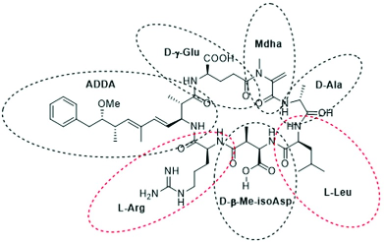
Chemical structure of MC-LR highlighting its seven amino acid residues (from McLellan et al, 2017)
Findings in MC-LR Toxicity
MC-LR toxicity can present with a variety of symptoms, and “typical” derangements on labs are not well characterized outside of rodent studies
Clinical suspicion should be high & based on patient history
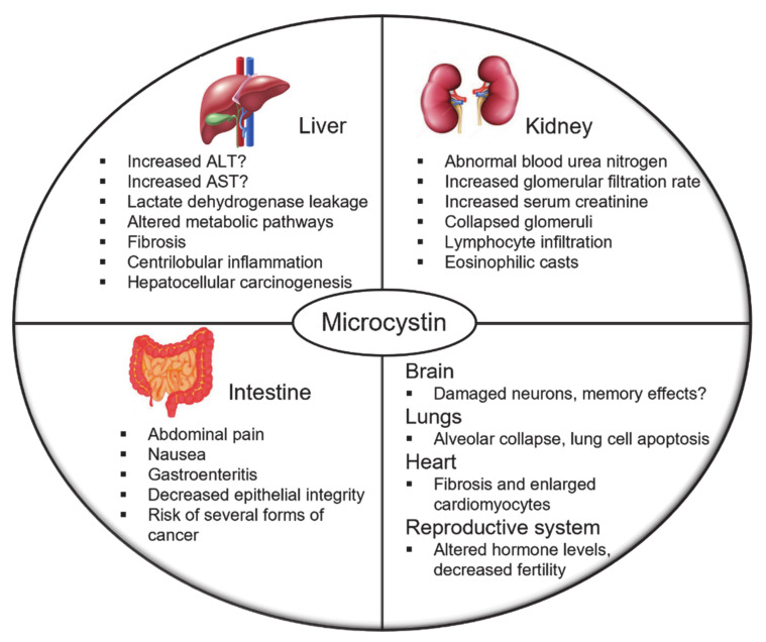
Microcystin pathophysiology (from Arman et al, 2021)
Microcystin Toxicity Diagnosis & Management
If suspected, MC-LR can be isolated from human plasma, urine, or feces using ELISA or gas chromatography
Although incidence of acute microcystin toxicity is likely underrecognized and underreported, toxicity is rarely fatal to humans
Fatal MC-LR toxicity has been widely reported in wildlife and livestock; fatality is attributed to differences in protein binding of MC-LR in humans vs. other species
Luckily, CHABs are very off-putting: musty odor and thick sludgy green water, which discourages human interaction with cyanotoxins
However, chronic exposure is also linked to the development of liver and neurological diseases, including through aerosolized MC-LR for those living near water with frequent CHABs
In the literature, treatment for people with suspected MC-LR toxicity has largely been supportive (IV fluids and nutritional support)
A case of acute MC-LR toxicity in a canine was treated successfully with the bile acid sequestrant cholestyramine, which is believed to have arrested transport of MC-LR into the liver. Rodents with acute MC-LR toxicity due to ingestion have also benefited from cholestyramine.
More research is needed on the acute effects of microcystin exposure, particularly through inhalation. Is it unknown whether treatments that could target hepatic handling of MC-LR are effective.
Notable Microcystin Drinking Water Contamination Events
Most current municipal water systems monitor cyanotoxin levels in drinking water. However, exposures have occurred:
1996: A dialysis center in Caruaro, Brazil used water contaminated by high levels of microcystins from a local reservoir where cyanotoxin levels were not being monitored. IV exposure resulted in fulminant liver failure in 101 of the 131 exposed patients. 50 of the patients with liver failure died.
2014: High concentrations of micocystins were found in drinking water of Toledo, OH (sourced from Lake Erie). 500,000 lost access to tap water for three days (do not drink/ do not boil advisory) until water treatment plants were able to implement additional purification measures, reducing microcystin concentrations back below 1.0 ppb.
AUTHORED BY: KENNA HAWES, MS4, CWRU SOM
FACULTY EDITING BY: LAUREN PORTER, DO
References
Arman T, Clarke JD. Microcystin Toxicokinetics, Molecular Toxicology, and Pathophysiology in Preclinical Rodent Models and Humans. Toxins. 2021; 13(8):537. https://doi.org/10.3390/toxins13080537
Azevedo SM, Carmichael WW, Jochimsen EM, Rinehart KL, Lau S, Shaw GR, Eaglesham GK. Human intoxication by microcystins during renal dialysis treatment in Caruaru-Brazil. Toxicology. 2002 Dec 27;181-182:441-6. doi: 10.1016/s0300-483x(02)00491-2. PMID: 12505349.
Cunningham BR, Wharton RE, Lee C, Mojica MA, Krajewski LC, Gordon SC, Schaefer AM, Johnson RC, Hamelin EI. Measurement of Microcystin Activity in Human Plasma Using Immunocapture and Protein Phosphatase Inhibition Assay. Toxins. 2022; 14(11):813. https://doi.org/10.3390/toxins14110813
Environmental Protection Agency. Harmful Algal Blooms (HABs) in Water Bodies. (2024, July 25). EPA. https://www.epa.gov/habs/what-are-effects-habs#:~:text=Acute%20illnesses%20caused%20by%20short,caused%20by%20common%20cyanobacteria%20toxins
May NW, Olson NE, Panas M, Axson JL, Tirella PS, Kirpes RM, Craig RL, Gunsch MJ, China S, Laskin A, Ault AP, Pratt KA. Aerosol Emissions from Great Lakes Harmful Algal Blooms. Environ Sci Technol. 2018 Jan 16;52(2):397-405. doi: 10.1021/acs.est.7b03609. Epub 2017 Dec 20. PMID: 29169236.
National Centers for Coastal Ocean Science. Bloom position forecast. NCCOS Coastal Science Website. (2023, November 28). https://coastalscience.noaa.gov/science-areas/habs/hab-forecasts/lake-erie/bloom-position-forecast/
National Science Foundation. Lake Erie’s toxic algae blooms: Why is the water turning green? NSF. (2019, April 8). https://new.nsf.gov/news/lake-eries-toxic-algae-blooms-why-water-turning#image-caption-credit-block
Paerl H.W. Mitigating Toxic Planktonic Cyanobacterial Blooms in Aquatic Ecosystems Facing Increasing Anthropogenic and Climatic Pressures. Toxins. 2018;10:76. doi: 10.3390/toxins10020076.
Plaas H.E., Paerl H.W. Toxic cyanobacteria: a growing threat to water and air quality. Environ Sci Technol. 2020;55(1):44–64.
Svircev Z., Lalic D., Bojadzija Savic G., Tokodi N., Drobac Backovic D., Chen L., Meriluoto J., Codd G.A. Global geographical and historical overview of cyanotoxin distribution and cyanobacterial poisonings. Arch. Toxicol. 2019;93:2429–2481. doi: 10.1007/s00204-019-02524-4.
U.S. National Library of Medicine. Microcystin-LR. National Center for Biotechnology Information. PubChem Compound Database. https://pubchem.ncbi.nlm.nih.gov/compound/Microcystin-LR
WTOL Staff. (2019, August 2). Toledo Water Crisis: What happened in 2014 to turn water toxic? | wtol.com. https://www.wtol.com/article/news/toledo-water-crisis-a-timeline-of-whats-happened-so-far/512-71a2414b-a34d-4b4a-9632-58e1c212d098