Ricin
Introduction
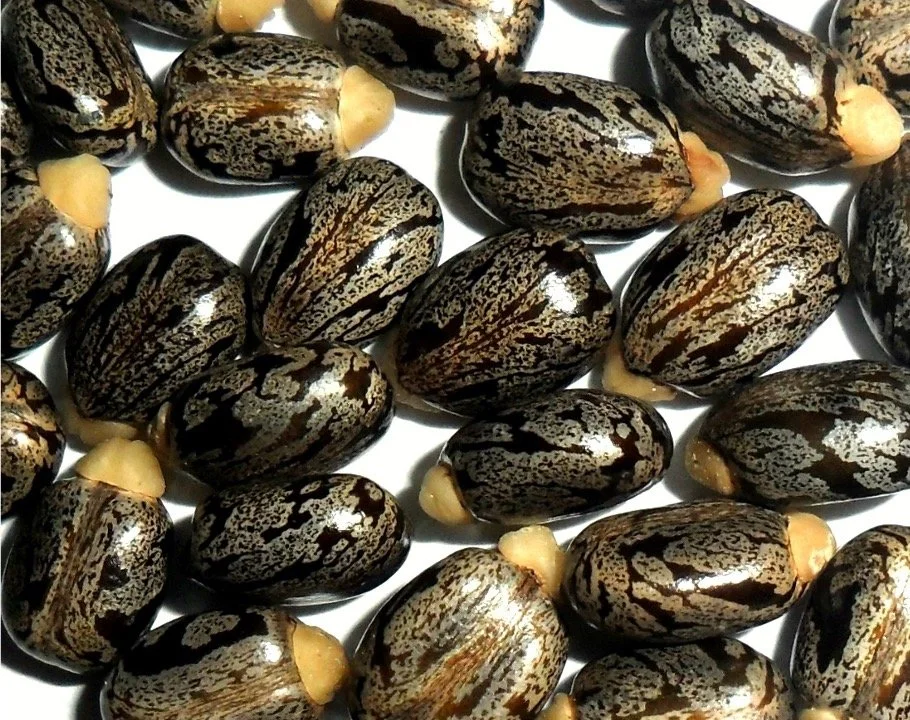
Ricin is a naturally occurring carbohydrate-binding protein (lectin) found in the seeds of the plant, Ricinus communis
Ricinus communis is commonly known as the castor oil plant
Indigenous to southeastern Mediterranean Basin, Eastern Africa, and India
The leaf, root, and seed oil are known to have medicinal properties:
Castor oil contains ricinoleic acid and triglycerides - used as a laxative and for skin/hair care
In Tunisia, it is used as a contraceptive
Anti-inflammatory, antioxidant, cytotoxic, antimicrobial
Ricin Toxin
The ricin toxin is one of the most toxic poisons to humans
As few as 5-10 micrograms per kilogram by inhalation or injection can be lethal
Average adult in U.S. is 80 kg 🡪 400-800 micrograms = 0.4-0.8 mg
1-20 mg per kilogram by ingestion can be lethal
Average adult in U.S. is 80 kg 🡪 80-1600 mg
Ingestion of only 2 castor oil seeds have been shown to be lethal
Easily produced as byproduct from castor oil production
Castor seed mash leftover after extraction of castor oil is 5% ricin
Considered a biological weapon: Category B biothreat agent
Long history of use in espionage and warfare by the U.S. and the Soviet Union
Assassination of Bulgarian dissident, Georgi Ivanov Markov- stabbed in the leg with an umbrella carrying a ricin pellet
In May 2013, actress Shannon Richardson mailed letters containing ricin to President Barack Obama, New York City Mayor Michael Bloomberg
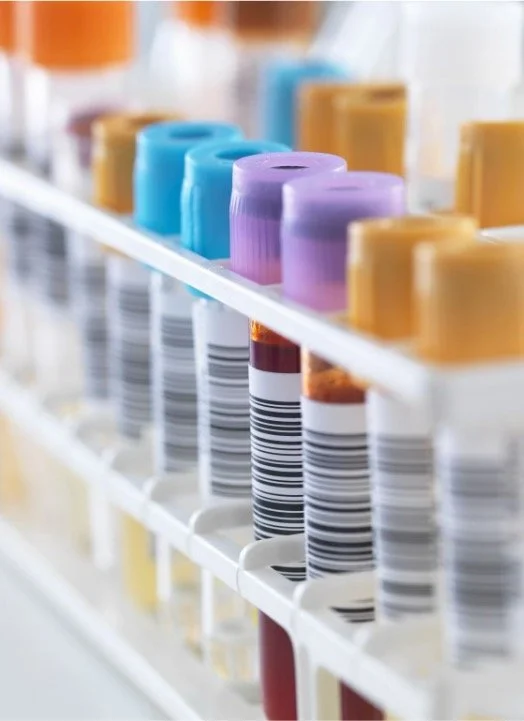
Image source: Audi J, Belson M, Patel M, Schier J, Osterloh J. Ricin poisoning: a comprehensive review. Jama. 2005 Nov 9;294(18):2342-51.
Ricin Toxicity
Mechanism of action
Ricin is a glycoprotein classified as Type II ribosome-inactivating protein
Ricin toxin B chain binds to carbohydrates on the surface of eukaryotic cells to facilitate entry of the toxin into the cell
Ricin toxin A chain inactivates ribosomes by hydrolyzing the N-glycosidic bond of an adenosine residue in the 28 S ribosomal RNA of eukaryotic cells 🡪 Profound inhibition of protein synthesis by blocking the binding of elongation factors
Ricin toxin A can inactivate about 1500 ribosomes per minute
Can be in form of powder, mist, or pellet
Injection
Inhalation
PO- least toxic route
Less likely absorbed through intact skin
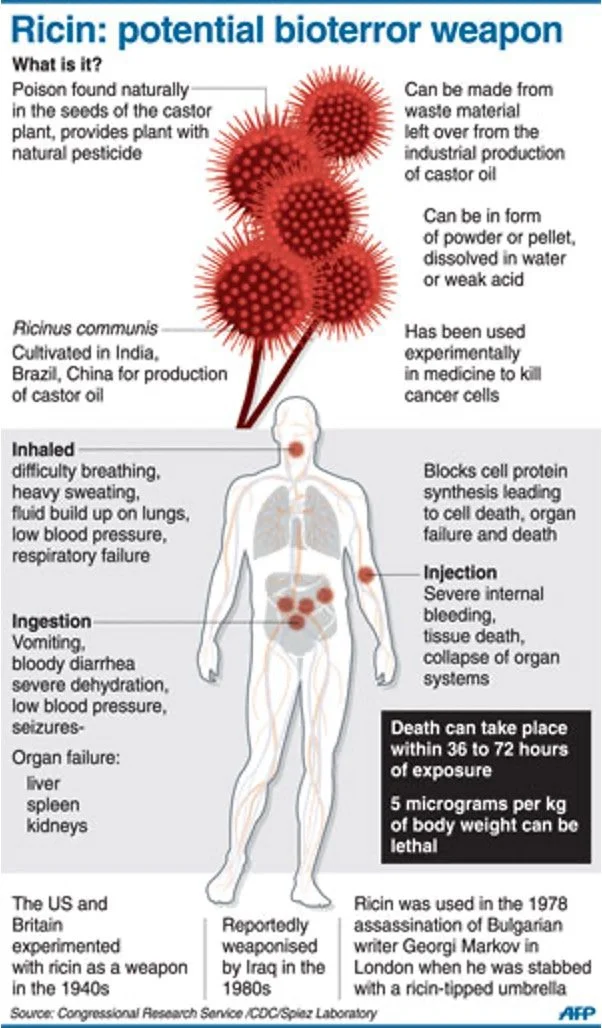
Symptoms of Ricin Toxicity
Symptoms of inhalation:
Onset: 4-8 hours & up to 24 hours
Fever, nausea, cough, wheezing, dyspnea, arthralgias, sore throat, congestion
Can cause allergic IgE-mediated reaction: reactive airway inflammation, rhinitis, and ocular irritation
May progress to pulmonary edema and pneumonia
Symptoms of injection:
Onset: 10-12 hrs
Presents similarly to sepsis: fever, headache, hypotension, dizziness, nausea, anorexia, abdominal pain
Localized tissue damage surrounding the injection site
Erythema, induration, blisters, capillary leak syndrome
May progress to seizures, shock, organ failure, pulmonary edema, and respiratory failure.
Symptoms of ingestion:
Onset: 4-6 hrs & up to 10 hrs later
Abdominal pain, nausea, vomiting, diarrhea, hematemesis, and melena.
May progress to necrosis of the spleen, liver, and kidneys
Death can occur within 36-72 hours of exposure
Differential Diagnosis
Ricin ingestion will can resemble food-borne, chemical or infectious gastroenteritis. Onset of GI symptoms may occur within a few hours of exposure. Symptoms can range from mild to severe (bloody diarrhea, dehydration, hypotension, and multisystem organ failure).
Rapid progression should raise suspicion for ricin exposure
Symptoms of inhalation are very nonspecific
Rapid progression of severe respiratory illness over 12 to 24 hours, after unknown inhalational exposures should raise suspicion for ricin exposure
Many other noxious chemicals can also produce injury in this time frame
A large group of people who had been close to each other rapidly developed fever, cough, and pulmonary edema should heighten suspicion for ricin exposure
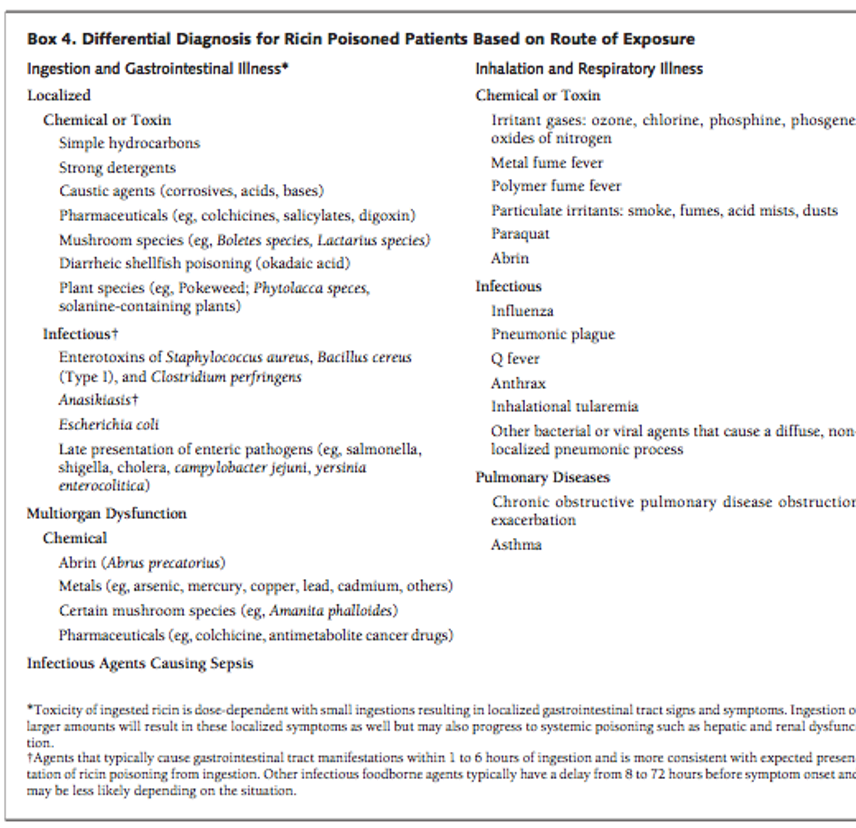
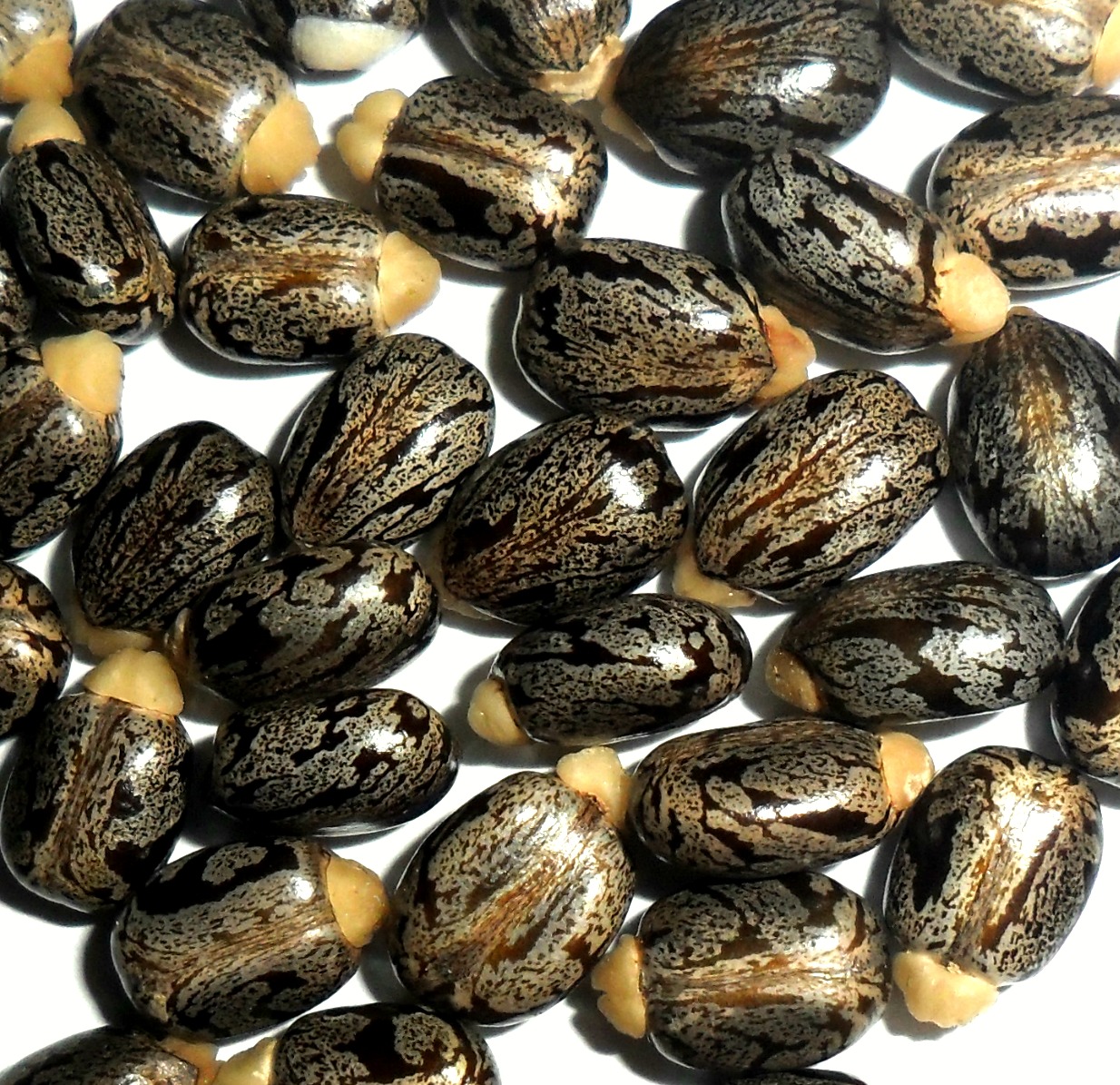
Image source: Audi J, Belson M, Patel M, Schier J, Osterloh J. Ricin poisoning: a comprehensive review. Jama. 2005 Nov 9;294(18):2342-51.
Diagnosis
Ingestion:
Leukocytosis
Electrolyte abnormalities
Elevated AST/ALT
Elevated CK
Hyperbilirubinemia
Anemia
Elevated Cr, BUN
Injection:
Elevated AST/ALT
Elevated amylase
Elevated CK
Hyperbilirubinemia
Myoglobinuria
Elevated Cr, BUN
Inhalation:
CXR: may be normal or may show pulmonary edema or pneumonia after ricin inhalation
No clinically validated methods are available to detect ricin in biological fluids.
Urine test for ricinine can be ordered but this is time consuming and is not widely available in an emergency response setting.
Treatment/Management
Supportive treatment:
Management of shock, correction of electrolyte abnormalities, respiratory support, and treatment of seizures.
If inhaled: airway management and positive-pressure ventilation.
If ingested:
Activated charcoal can be given if vomiting has not yet occurred and the patient's airway has been secured.
Gastric lavage can be used if ingested within one hour.
There is no antidote
Neutralizing antibodies are being researched
However, a review found that most of the anti-RT antibodies showed no neutralizing activity or showed only neutralizing activity in vitro
AUTHORED BY: LISA TAN, MS4
FACULTY EDITING BY: LAUREN PORTER, DO
References
Audi J, Belson M, Patel M, Schier J, Osterloh J. Ricin poisoning: a comprehensive review. Jama. 2005 Nov 9;294(18):2342-51.
Hayoun MA, Kong EL, Smith ME, et al. Ricin Toxicity. [Updated 2022 Jul 18]. In: StatPearls [Internet]. Treasure Island (FL): StatPearls Publishing; 2022 Jan-. Available from: https://www.ncbi.nlm.nih.gov/books/NBK441948/?report=classic
Kuete V. Physical, Hematological, and Histopathological Signs of Toxicity Induced by African Medicinal Plants, Editor(s): Victor Kuete, Toxicological Survey of African Medicinal Plants, Elsevier, 2014, Pages 635-657, ISBN 9780128000182,
Subramaniyan V. Therapeutic importance of caster seed oil. InNuts and Seeds in Health and Disease Prevention 2020 Jan 1 (pp. 485-495). Academic Press.
Yu H, Li S, Xu N, Liu W. Ricin toxin and its neutralizing antibodies: A review. Toxicon. 2022 May 17.